Recap of ECCB 2026
2026-08-28 09:51:00
The 8th European Congress for Conservation Biology (ECCB 2026) brought the conservation community together in Leiden, the Netherlands, from 6–10 July 2026 under the theme Effective biodiversity conservation.
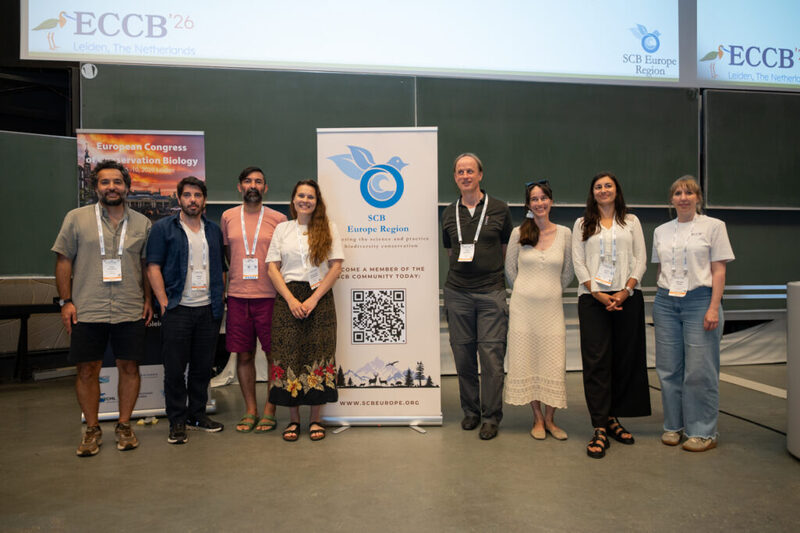
The scale and diversity of this year's congress were impressive. Across five days, more than 850 participants from 25 countries came together for nearly 700 scientific presentations. The programme featured 33 symposia, 40 parallel sessions, 34 thematic poster sessions and 11 round tables, alongside panel discussions, five keynote lectures, as well as workshops, training courses and excursions.
The scientific programme reflected the extraordinary breadth of modern conservation science and practice. Contributions tackling the central conference theme ranged from species and habitat conservation, protected areas, restoration and rewilding to climate and land-use change, ecological connectivity, conservation genomics and emerging technologies. At the same time, sessions explored human–wildlife coexistence, governance and policy, social and economic dimensions of conservation, community-based approaches, and the role of arts and humanities in conservation.
A
particular focus of ECCB 2026 was on connecting conservation science with
policy, practice and society. This was already evident during the opening ceremony, where
congress co-organiser Geert de Snoo introduced the conference theme and a
statement calling for 1% of GDP to safeguard nature. Contributions from Frans Timmermans, Eric Mamer, Alessandra Zampieri and Sanne Kruid brought
perspectives from European and national biodiversity policy and the
science–policy interface. The opening ceremony concluded with an interactive
forum bringing the speakers together to discuss how stronger coherence between
science, policy and society can help turn conservation knowledge into action.
This spirit
of exchange continued throughout the week. Round tables and panel
discussions were introduced as new session formats at ECCB 2026,
complementing the traditional symposia and contributed talks. Rather than
focusing primarily on presentations, these sessions created dedicated spaces
for dialogue, debate and knowledge exchange, bringing together perspectives
from research, policy and practice and allowing greater participation from the
audience.
ECCB 2026
also celebrated outstanding contributions to conservation and the diversity of
ways in which people engage with nature, presented by SCB Europe. Early Career
Conservation Awards were presented to Hanna Pettersson, Volen
Arkumarev and Louise O’Connor, while Petr Zasadil and Julia P. G. Jones
received Distinguished
Service Awards. The congress further recognised creativity through the Art of Carpathian Awards
and invited a much younger generation into the conversation through the Kids
Drawing Prizes. Student contributions were celebrated with Best Student
Poster Awards, awarded to Nika Knez, Anna-Lena Mieke and Vincent Grognuz.
Together, the five days in Leiden demonstrated not only the breadth and vitality of conservation biology in Europe, but also the importance of creating spaces where different disciplines, sectors, career stages and forms of knowledge can meet. ECCB 2026's central message was clear: effective biodiversity conservation requires not only excellent science, but connection – between disciplines, between science and policy, and between people.